Why I Didn’t Let Generative AI Write the Text of My Book

Contents
- Where AI Helped Me Write the Book
- For the Actual Content, I Still Felt Humans Could Do Better
- It Isn’t Rooted in Specific Experiences or Feelings
- It Can Misjudge Where People Actually Struggle
- Choosing What Not to Explain May Be Difficult for AI
- It Falls Short in Niche Fields with Little Training Data
- It Tends to Play It Safe and Lacks Originality
- Closing Thoughts
This article focuses on AI, so you don’t need to know shogi to read it.
I challenged myself to collect ideas about shogi, a longtime hobby of mine, and write and publish a Kindle book. Here are some things I noticed while using generative AI during that process.
Here’s the book I wrote! It’s available through Kindle Unlimited. 📚
I’d be delighted if you had a quick look through it!
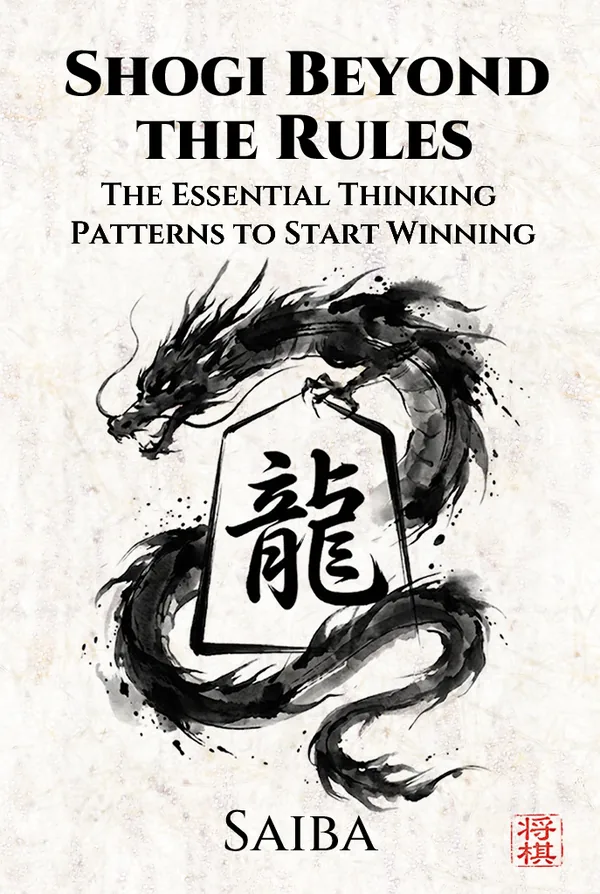
Shogi Beyond the Rules
View on AmazonThe link below is for anyone whose ad blocker prevents the book from appearing.
Shogi Beyond the Rules
https://www.amazon.com/dp/B0G6XPB6S7
Where AI Helped Me Write the Book
First, generative AI—ChatGPT—was extremely helpful with things like proofreading and page layout.
The manuscript eventually ran to tens of thousands of Japanese characters, and checking everything alone was becoming difficult.
Having it point out typos, awkward transitions, and repeated explanations was a huge help.
The book was mostly text without illustrations, so I also tried designs such as boxed passages and underlining to make it easier to read. AI gave me ideas and CSS examples for those, too.
For the Actual Content, I Still Felt Humans Could Do Better
But I came up with the book’s concept, decided what I wanted to convey, and wrote the actual text entirely myself.
For the reasons below, I honestly felt that leaving this part to current AI wouldn’t produce good content.
There are plenty of articles about how amazing AI is. Here, I deliberately want to write about the limitations and weaknesses I felt it had when writing a how-to book.
I’m not an expert on the latest developments in generative AI. Some of these problems might be solvable with the right service or tuning, so please read this with that in mind.
It Isn’t Rooted in Specific Experiences or Feelings
Obviously, AI has no life experience.
And when giving someone advice, you first have to make them want to listen.
Having real experiences such as “I struggled with that too” or “I thought deeply about how to handle it” should make a difference to a reader’s willingness to hear what you have to say.
AI’s writing is logical and polite, but when I ask whether it’s enjoyable to read, I often find it rather bland.
In a way, a human author’s experiences and individual way of thinking provide entertainment and give the writing some flavor.
It Can Misjudge Where People Actually Struggle
For a book like this, understanding where people get stuck and what advice they want is crucial. I believe experiencing the process yourself, or watching many others go through it, matters enormously.
I feel that AI hasn’t learned enough of that from digital data and doesn’t understand those practical sticking points.
Choosing What Not to Explain May Be Difficult for AI
My policy when writing the book was to include only what readers needed to understand at that stage. I deliberately avoided long explanations of overly advanced material or exceptional cases.
I thought that prioritizing precision and completeness by packing in rarely useful information or making things complicated would make the book harder to finish and understand.
What mattered was consistently communicating advice that works around 90% of the time, while leaving out things likely to become noise.
AI tends to want to tell you everything it knows. I think it struggles to choose appropriately what not to explain for a learner’s particular level.
It Falls Short in Niche Fields with Little Training Data
There’s probably plenty of information in academic fields such as science. But in a relatively niche field like shogi, I felt it didn’t give me anything more useful than I could find by searching myself, and it often produced unreliable information.
If AI one day gains the ability to analyze shogi game records and explain them in words, I think it could provide a tremendous amount of insight. For now, though, I feel that strong human players possess more practical knowledge.
It Tends to Play It Safe and Lacks Originality
Even when I had it research information on the web before writing, I felt the result was just a collection of familiar ideas.
AI is probably good at summarizing and organizing existing information.
But I would expect it to struggle with considering questions nobody has thought of before or offering a genuinely new perspective.
I also think it struggles to pick up important views that have been drowned out by the majority.
At present, I don’t think it often produces articles that make you feel, “Only this particular author could have written this.”
Closing Thoughts
AI’s progress is remarkable. Just as shogi AI has become strong enough to overwhelm professionals in recent years, I personally expect generative AI to overcome these challenges eventually.
As I mentioned at the start, being able to hand over some tedious proofreading and parts of design that I lack expertise in is already a major benefit for independent publishing.
I think it’s wonderful that someone with something to share can now make a book relatively easily, even without previous publishing experience.
But at this point, it certainly isn’t all-purpose. My experience is that humans can still do better when it comes to written content.