Splendor Strategy for Beginners: Practical Exercise 1
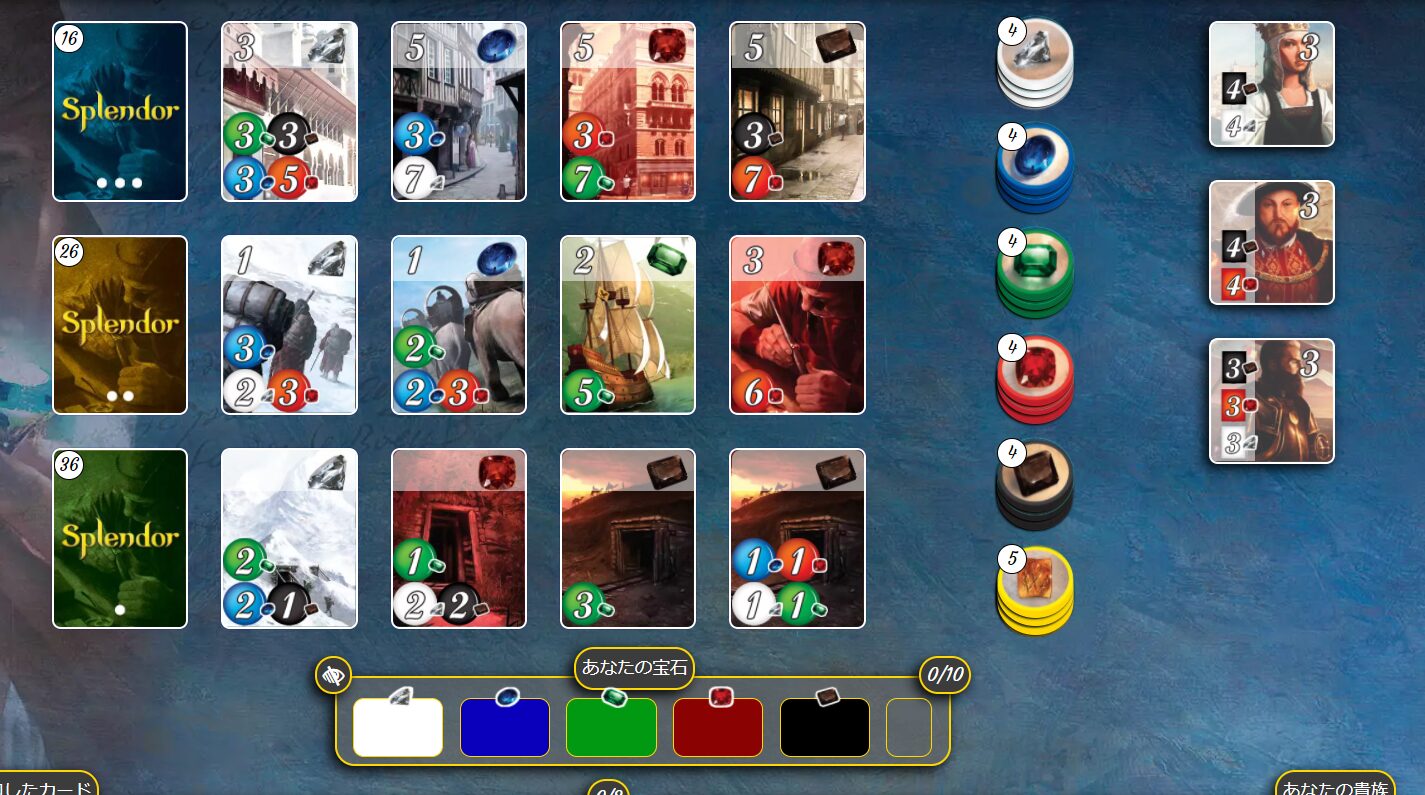
Splendor is one of the board games I can reasonably say I’ve mastered the most.
I had some notes on what I think about on the first turn, so I thought I’d share them with fellow Splendor fans.
The Problem
In the starting position below, what would you do as the first player on turn one?
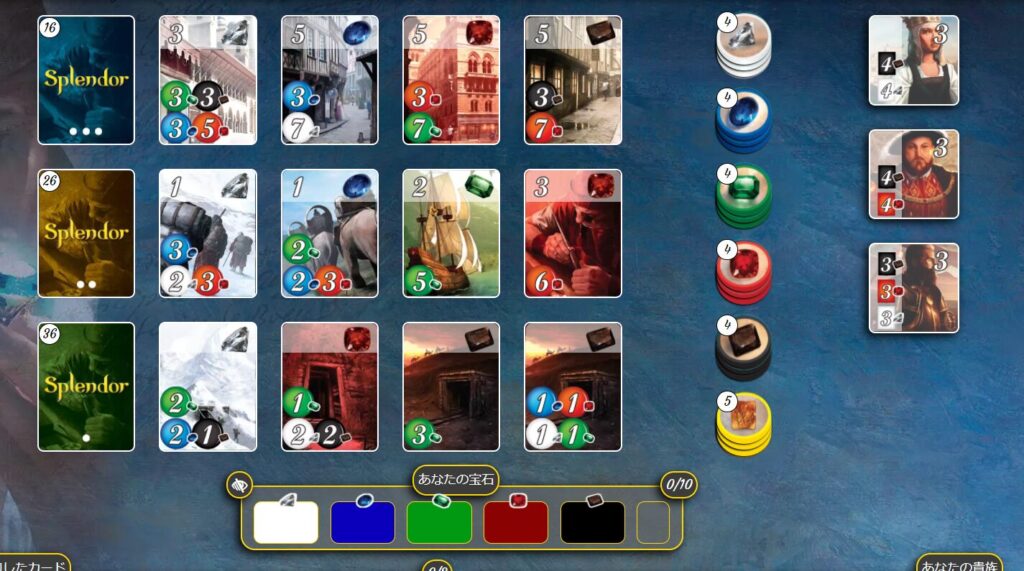
Don’t just look for an answer. Try to spot as many features of this starting position as you can!
↓↓↓↓↓ I’m leaving some space below so you can think about it for yourself first.
↓
↓
↓
↓
↓
↓
↓
↓
Explanation
How I Refer to Cards
When describing a card in text, I’ll use:
Its cost numbers in descending order, followed by the card’s own color in parentheses.
That’s the notation I’ll use below.
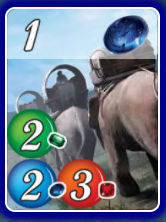
For example, I’ll call the following card 322 (blue).
Things to Notice
The nobles require only white, red, and black. In particular, black is involved in every one of them.
Although black helps with nobles, it has few other uses in the current position. There’s no need to rush to collect two or more black cards.
Building heavily into red works well with the nobles, but the visible cards only take that route to eight points. Committing early could leave you running out of steam and losing in the endgame.
Building heavily into green only offers seven visible points and takes you away from the nobles, so I’d avoid it. It might become relevant if both players lock up white, red, and black and the game stalls, but for now it’s fine to ignore it.
My Conclusion
No plan is strong enough to commit to from the start and stake the whole game on.
So I’ll initially aim to buy either a black or a red card. Planning on 3 (black) or 221 (red), I take white, black, and green tokens. If the second player reserves something next, I can take green up to three tokens.
In the actual game, my opponent reserved 6 (red), so I reserved 221 (red) on my next turn as insurance. It isn’t a card I’d reserve on the first move, but I now needed to deny red aggressively to counter 6 (red).
The 6 (red) would occupy one of my opponent’s reservation slots for a while, whereas I could buy my 221 (red) early. I think that’s a reasonable trade.
An Aside: How the Game Played Out
After that, I focused on collecting white and black cards while tightly restricting red and white tokens. My opponent couldn’t buy 6 (red) until turn 21. I secured one card of each color, then took the noble requiring four white and four black cards, bought 73 (white), and eventually won 16–7.
My opponent said “woaw so strong” and asked why they had lost, so I explained that they had reserved too early.
In this game, reserving too early can become a burden: gold occupies space within your token limit, and reserved cards may take a long time to clear from your reservation slots.